sx blog
Our digital space for brief commentary and reflection on cultural, political, and intellectual events. We feature supplementary materials that enhance the content of our multiple platforms.
What's beyond the boundary of the shoreline? | Nadia Huggins | TEDxPortofSpain

In this talk, Nadia Huggins, an artist affiliated with Small Axe's Caribbean Queer Visualities project, explores the in-between spaces of the shoreline and beneath the water. Through the use of her images, she explores the moments of vulnerablities of moments at the boundaries of the shorelines and how constructs emerge in these spaces. Nadia Huggins is a self-taught visual artist and self-employed graphic designer. She was born in Trinidad & Tobago, grew up in Saint Vincent & the Grenadines, and has lived and worked in Saint Vincent, Saint Lucia, and Trinidad. While she has been a practicing artist for over a decade, the loss of a parent deepened her connection with visual arts where she found creative potency in the catharsis of making images. Nadia’s practice is dedicated to challenging perceptions about what the Caribbean and Caribbean photography look like. Her main preoccupation has been with the sea which she feels presents an opportunity to explore new ways of imagining ourselves.
You can view her talk here.
This talk was given at a TEDx event using the TED conference format but independently organized by a local community.
Listening to Small Axe 54
Listening to Small Axe 54

Popcaan Where We Come From album cover by Small Axe 54 cover artist Ricardo Edwards
by Tiana Reid
For the playlist to accompany Small Axe's latest issue, we stayed close to the Jamaican 1960s special section. And yet the afterlife of music—Peter Tosh's "I Am That I Am" (1977) or even Popcaan's "Where We Come From" (2014)—suggests that the 1960s as an era lived much longer than its nominal decade.
Small Axe 54 playlist.
sx salon 26 Available Online
sx salon 26 Available Online

In this twenty-sixith issue of sx salon, Vanessa Valdés serves as guest editor for a special discussion, “Commemorating 1917.” As Valdés noted in her Call for Papers earlier this year, “1917 was a significant year in the Caribbean,” with major happenings in Puerto Rico, the Virgin Islands, Haiti, and the Dominican Republic. In planning the special section, sx salon editors were intrigued by the eventfulness of that year; in the late stages of producing the issue, we found ourselves caught in the heart-wrenching eventfulness of this year. In an echo of her CFP, Valdés begins her introduction of this special section with “The Caribbean will forever be marked by September 2017.” The September hurricanes Irma and Maria required that we not simply revisit but critically question historical moments such as the 1917 JonesShafroth Act (granting US citizenship to residents of Puerto Rico) and the 1917 US purchase of St. Croix, St. Thomas, and St. John.
Along with Valdés’s thought-provoking introduction, included in this section are Imani Owens’s examination of Caribbean intellectuals’ involvement in the 1917 East St. Louis riots; Nathan Dize’s translation of Charles Moravia’s poem “La vision du Président Wilson,” which reflects on the US interventions in the region, particularly in Haiti; Janelle Rodriques’s reading of indenture and the power inequalities of interracial romance in A. R. F. Webber’s Those That Be in Bondage; Satty Flaherty-Echeverría’s analysis of Luis Felipe Dessús’s “La Raza de Color y la Independencia de Puerto Rico” essay series on the complexities of US citizenship for black Puerto Ricans; and Tami Navarro’s reflections on the transfer of the Virgin Islands from Denmark to the United States.
Accompanying this special section on 1917, this issue includes three reviews and brand new creative works. Solange Anduze James reviews Marcia Douglas’s imaginative novel, The Marvellous Equations of the Dread; Philip Kaisary reviews Jeremy Glick’s The Black Radical Tragic: Performance, Aesthetics, and the Unfinished Haitian Revolution, winner of the 2017 Nicolás Guillén Outstanding Book Award (Caribbean Philosophical Association); and Alexandra Gonzenbach Perkins reviews Ylce Irizarry’s perspective-shifting monograph, Chicana/o and Latina/o Fiction: The New Memory of Latinidad. In Poetry and Prose, appears Vanessa Pérez-Rosario’s translation of a selection of poems by Mayra Santos-Febres, whose poetry has not before been translated into English. We also publish new poetry by Christopher Williams and new prose fiction by Gilberte O’Sullivan.
For the full table of contents for this issue, please see below.
_____________________________
Table of Contents
Introduction and Table of Contents—Kelly Baker Josephs
Reviews
Kingston Rhythm: A Record of Lost Dreams—Solange Anduze James
A review of The Marvellous Equations of the Dread: A Novel in Bass Riddim, by Marcia Douglas
The Haitian Revolution and Black Radical Political Desire—Philip Kaisary
A review of The Black Radical Tragic: Performance, Aesthetics, and the Unfinished Haitian Revolution, by Jeremy Matthew Glick
Resisting Neocolonialism and Finding Identity through New Memory—Alexandra Gonzenbach Perkins
A review of Chicana/o and Latina/o Fiction: The New Memory of Latinidad, by Ylce Irizarry
Discussion—Commemorating 1917
Commemorating 1917: A Discussion of Citizenship and Freedom in Caribbean Literature—Vanessa K. Valdés
Translating Global Citizenship: Haiti, Charles Moravia, and Woodrow Wilson—Nathan H. Dize
Luis Felipe Dessús and US Citizenship for Black Puerto Ricans—Satty Flaherty-Echeverría
Poetry
Mayra Santos-Febres, translated by Vanessa Pérez-Rosario
Christopher A. Williams
Prose
Cutlass through Water—Gilberte O’Sullivan
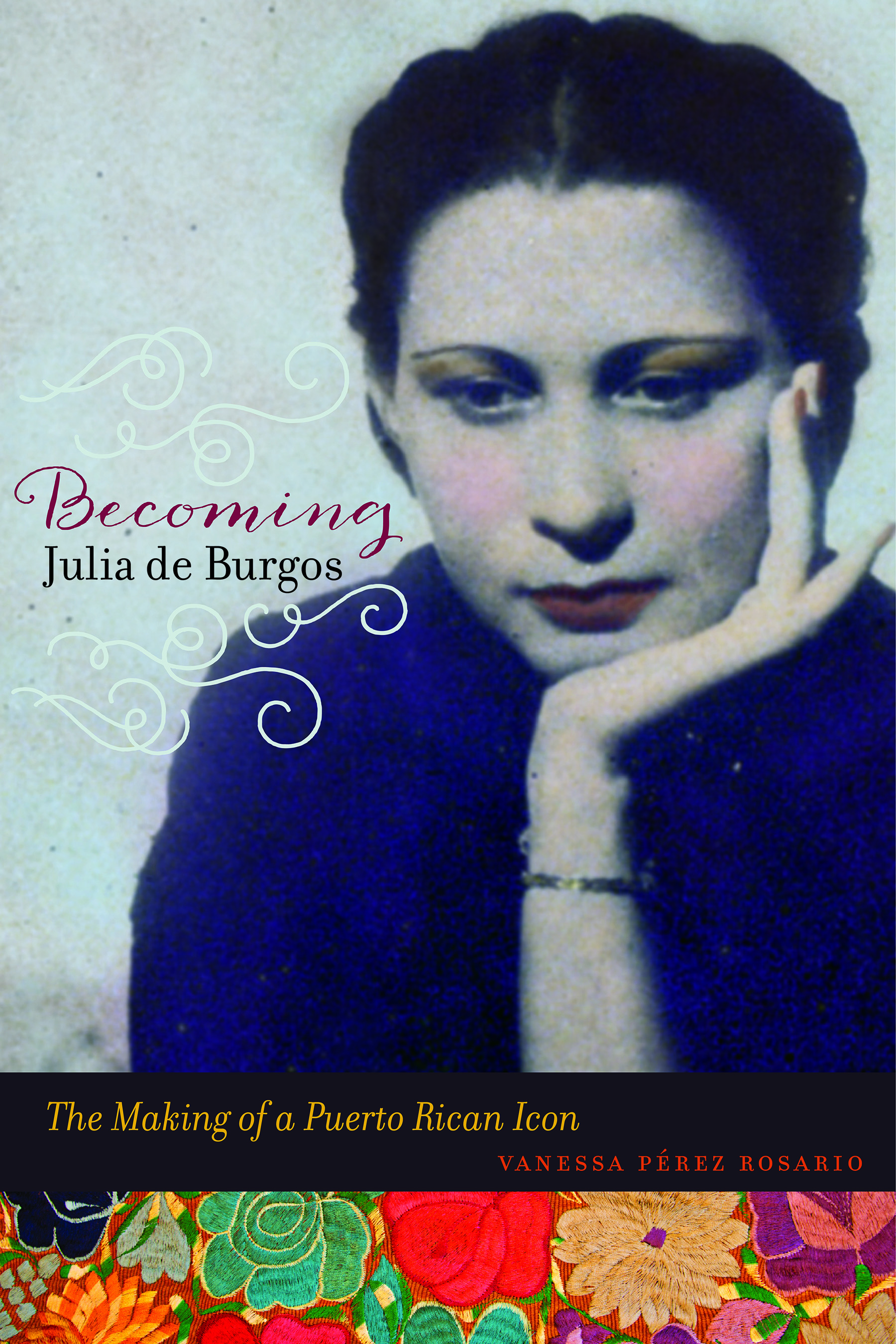
Listening to Becoming Julia de Burgos
Listening to Becoming Julia de Burgos
By Wilfredo J. Burgos Matos
Julia de Burgos, who carried transnationalism in her soul, was a New Yorker. Her poetic voice transmits a city-like feeling that has touched many readers throughout the world. This playlist creates a connective bridge between Caribbean urban spaces and New York City strengthened by rhythm and sound. From the feminist lyrics of Santo Domingo’s Sonia Silvestre in "Yo quiero andar" to Havana's Omara Portuondo and her uncontrollable sorrow in "Vuela pena," the need to claim a space through voice portrays a series of intertwined themes that vitalize Julia's poetics of womanhood in every sense.
Iconic Puerto Rican songwriter and Burgos’s contemporary, Sylvia Rexach, wandered through Santurce, San Juan in search of the stories of her unmatchable songs, reminding us of the hardness of love’s abyss. Zoraida Santiago, known for musicalizing Burgos’s poetry, helps us reimagine women’s agency in the musical version of “Yo misma fui mi ruta.” Lucecita Benítez in "Yo era una flor," written by Rexach, makes us reflect on the unjust treatment of women's bodies—ones that, regardless of infinite mistreatments, will fight endlessly for a life of their own as we can see in "Los inmigrantes" by Silvestre, a song that reflects on the music that comes from the flesh of those who wander through the world in need of a better place just like Julia.
In short, these songs show us that there are no limits to patriarchal mindsets, and that the voice will always make eternal the quest for simply being.
Songs:
Yo quiero andar (Neobachata) - Sonia Silvestre
Vuela pena (Nueva Trova) - Omara Portuondo
Alma adentro (Bolero) - Sylvia Rexach
Yo era una flor (Bolero) - Lucecita Benítez
Yo misma fui mi ruta (Rumba) - Zoraida Santiago
Los inmigrantes (Salsa/Funk/Nueva canción dominicana) - Sonia Silvestre
Listen to the playlist here.
Wilfredo J. Burgos Matos is a singer, writer, performance artist, and PhD student in Latin American, Iberian and Latino Cultures at The Graduate Center, CUNY. Follow him on Instagram @wilfredo211.
the caribbean digital IV
the caribbean digital IV
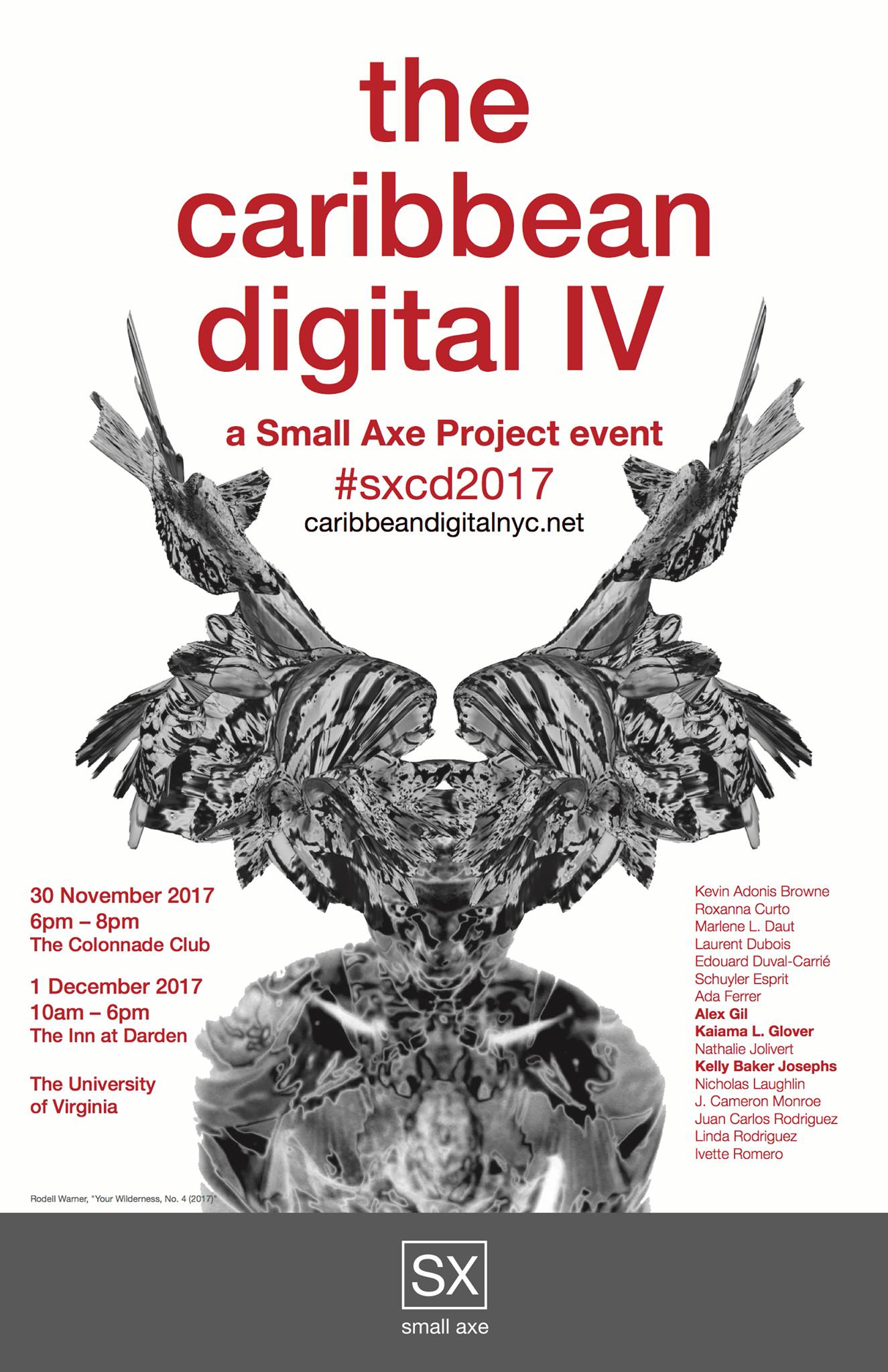
30 November – 1 December 2017
The Colonnades Club and The Inn at Darden
University of Virginia
In our evening keynote conversation and over the course of our day of multiform panel presentations, participants engage critically with the digital as praxis, reflecting on the challenges and opportunities presented by the media technologies that evermore intensely reconfigure the social, historical, and geo-political contours of the Caribbean and its diasporas. Presenters consider the affordances and limitations of the digital with respect to a wide range of disciplines and methodologies. Discussions pick up themes addressed in our 2014 inaugural event and, subsequently, during our 2015 and 2016 events – many of which currently feature in our first and second issues of sx archipelagos, the peer-reviewed Small Axe Project publishing platform dedicated to Caribbean digital scholarship and scholarship of the Caribbean digital. Read more on our website here.
SX 54 is Now Available!
SX 54 is Now Available!
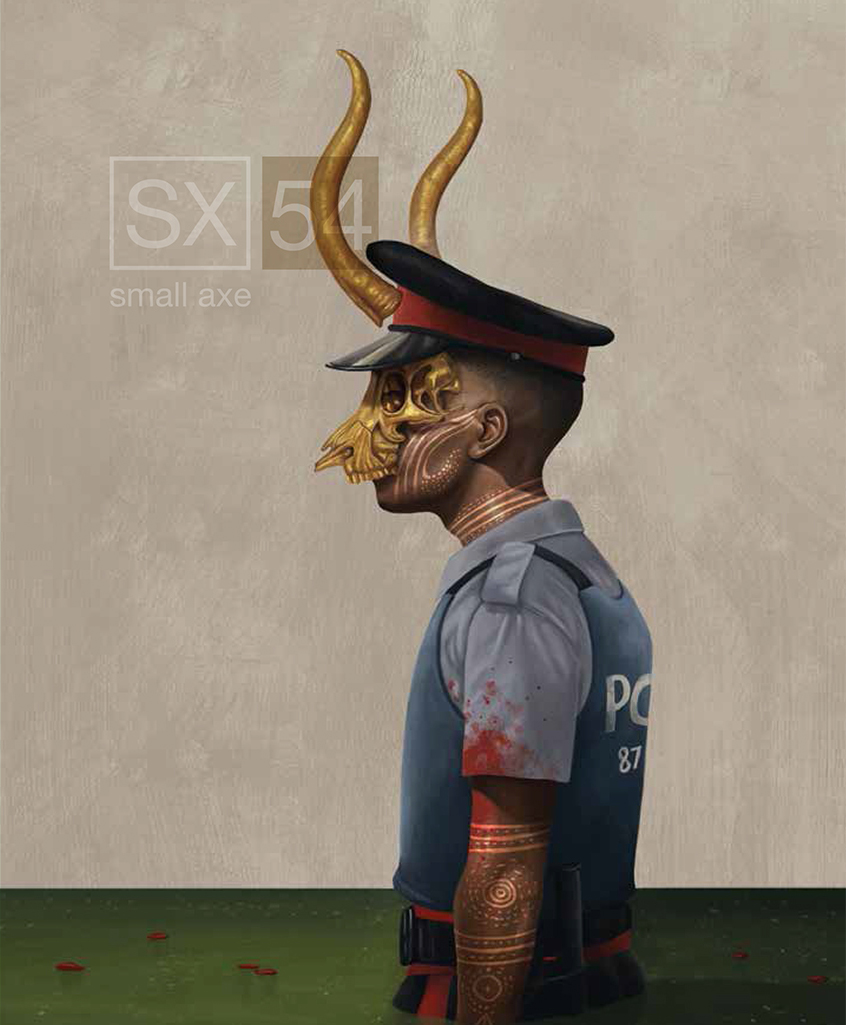
The November 2017 issue of Small Axe is now available. This issue includes a special section entitled "The Jamaican 1960s," with essays by David Scott, Donette Francis, Deborah A. Thomas, Sheri-Marie Harrison, Obika Gray, Maziki Thame, Faith Smith, and Charles Carnegie. The issue also includes a book discussion of SX's managing editor, Vanessa Pérez-Rosario's, book Becoming Julia de Burgos: The Making of a Puerto Rican Icon.
You can browse the new issue's full table of contents at Duke University Press's website, where it is also available for purchase.
Yarimar Bonilla on Hurricane Maria
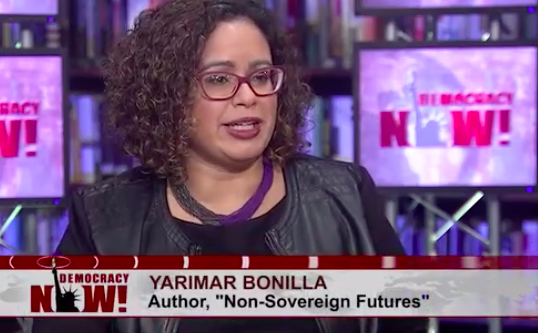
In light of the Small Axe Project's continued attention to recent hurricane-wrought devastation across the Caribbean, we would like to share our own, Yarimar Bonilla's recent writings and interviews on Puerto Rico and the political, economic, and environmental situation on the island before and after Hurricane Maria. You can see her on an interview for Democracy Now!, read a recent article written for the Washington Post, or read her in conversation with Bill Moyers for his website.